Sitting posture type test
Almost everyone who sits at a desk all day falls into one of four patterns, and each one calls for a different fix. Telling someone with a rolled-back pelvis to “sit up straight” is useless advice — so the test below figures out which pattern you actually have first.
The four patterns
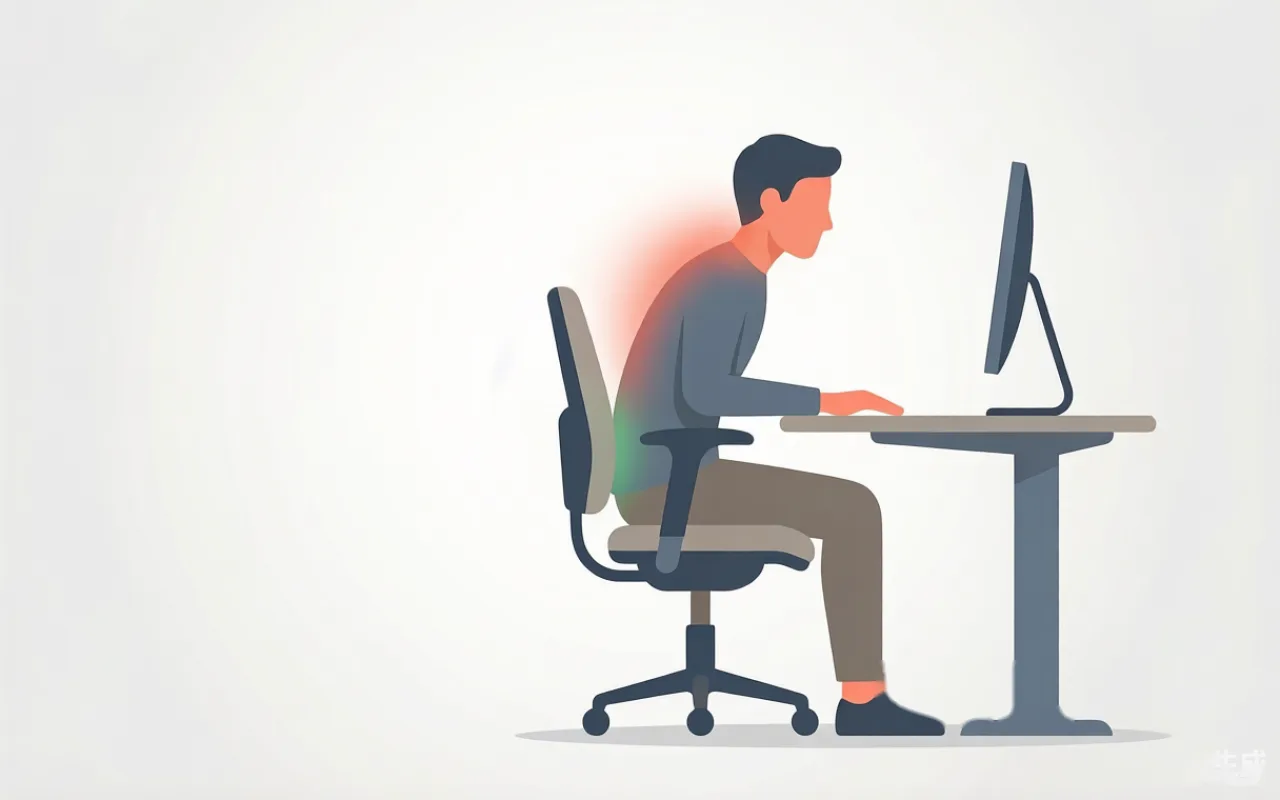
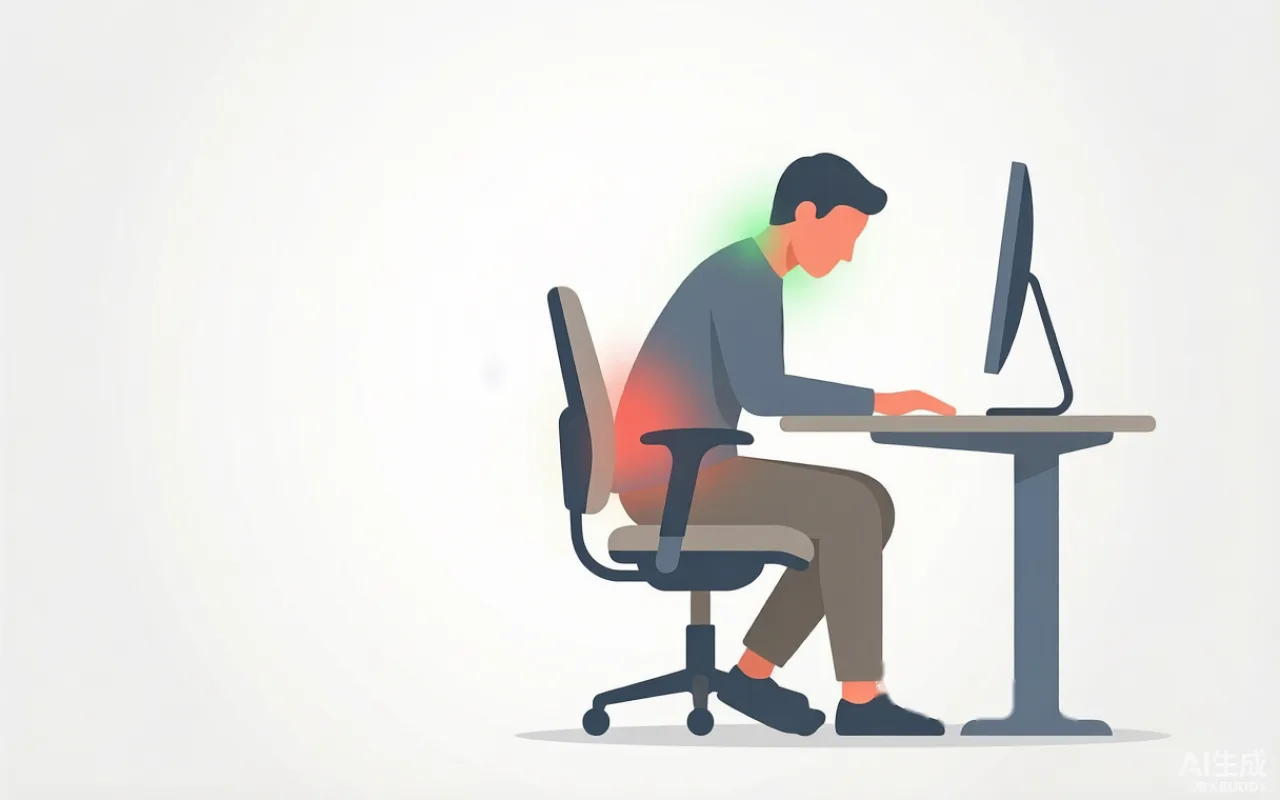
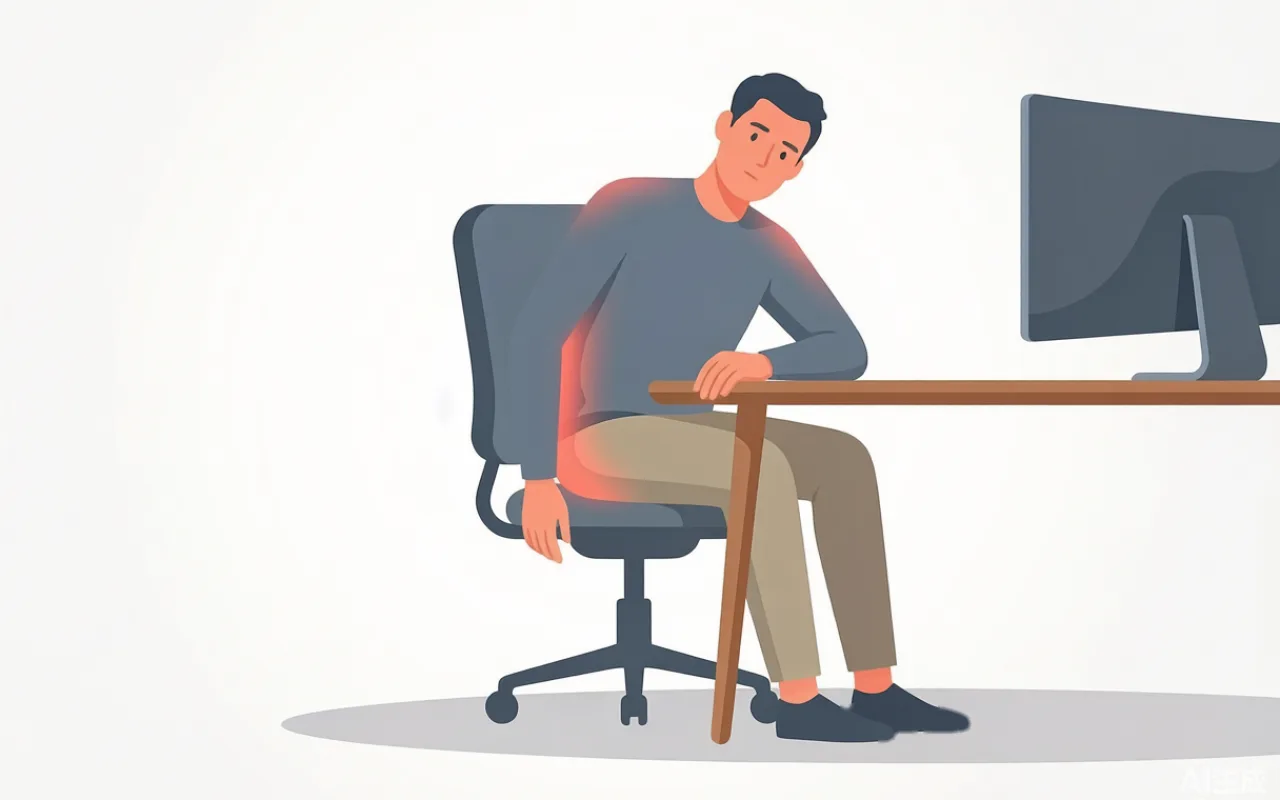
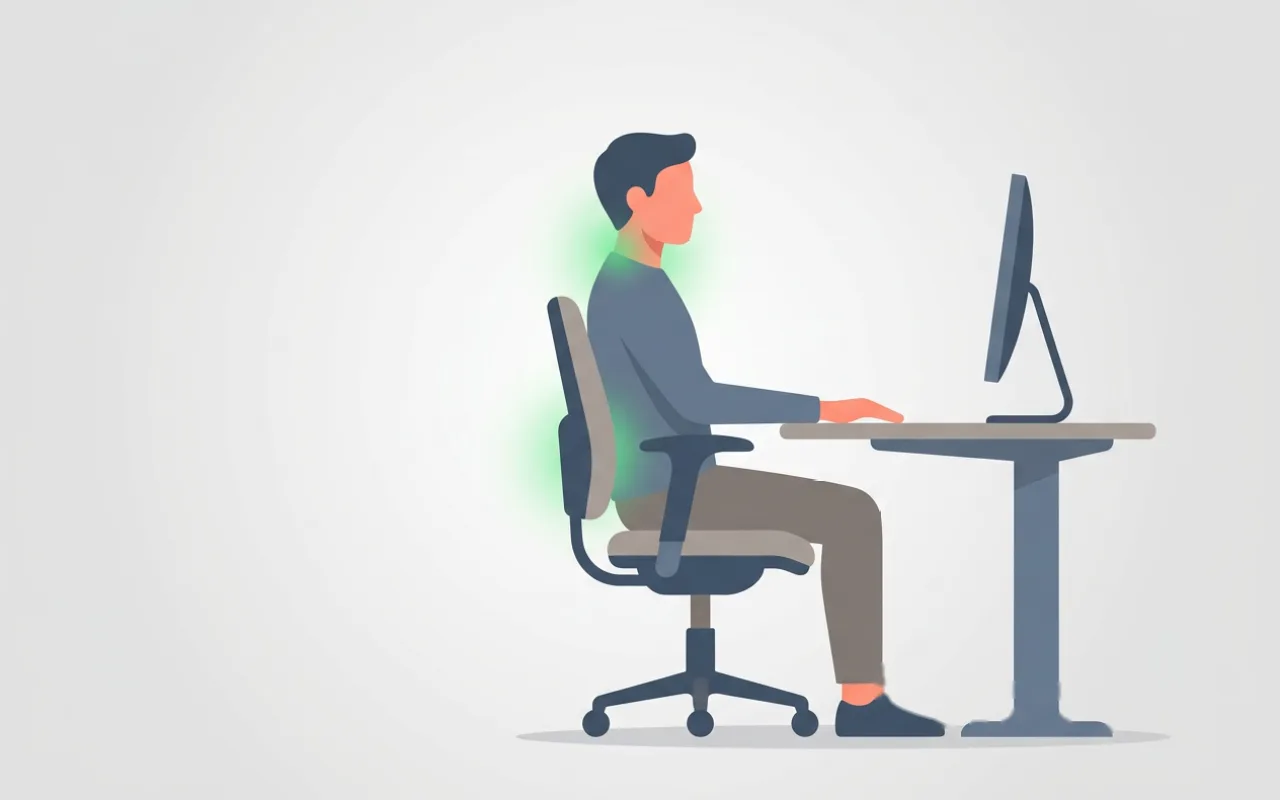
Hover over the diagram to pause it, or use the tabs to compare. Once you have a sense of the difference, the test takes about a minute and gives you the specific fix for your pattern.
Side view: where does your head sit right now?
How to recognise each type without the test
The Forward Sloucher
Your head sits in front of your shoulders rather than on top of them. The quickest check: in a side-view photo, your earlobe should line up roughly over the point of your shoulder. If it sits several centimetres forward, the muscles at the back of your neck are holding your head up all day. This is the pattern most often caused by a laptop, because the keyboard and the screen are welded together — you cannot raise one without dropping the other.
The Sinker
Your pelvis rolls backward, flattening the natural inward curve of your lower back, and you slowly slide toward the front of the seat. People with this pattern usually describe stiffness rather than pain — the kind where standing up after an hour takes a moment. Deep, soft seats and missing lumbar support cause it, and “sit up straight” makes it worse because it fights the pelvis instead of the chair.
The Side Leaner
One side of your body does more of the work. A monitor off to one side, a mouse reached for rather than held close, or the same leg crossed all day will all produce it. The giveaway is pain that shows up on one side only — one shoulder, one hip, one side of the lower back. You cannot see this one in a side view, which is why the diagram above switches to a rear view for it.
The Steady One
No clear compensation pattern: your joints are roughly stacked and no single area is covering for another. If this is you, posture work will not gain you much — duration will. Hold even a good position for 45 minutes and the muscles fatigue while blood flow drops, so the useful habit is changing position, not finding a better one.
Where the numbers behind this come from
The four posture types are scored against the same model used by the rest of the site: desk, chair and screen height as ratios of your height, derived from published body-measurement data rather than guessed. See how they are derived and where the model breaks down.
What this test is not
It is a self-assessment, not a clinical evaluation, and it cannot see you — it only reports what you tell it about your habits. Persistent pain, numbness, tingling, or weakness radiating into an arm or leg are worth taking to a physiotherapist or doctor rather than to a quiz. Nothing here is medical advice.
Frequently asked questions
Is the goal to sit perfectly straight?
No. A rigidly upright position is just another static load, and it usually collapses within ten minutes. The aim is a position you can hold without effort and then change often. A slight backward lean of 100–110° with proper support is normally easier to sustain than a forced 90°.
Do posture correctors or braces help?
They hold you up while you wear them and do nothing once you take them off, because they replace the muscles rather than training them. What actually shapes your posture is where the screen and keyboard are. Fix those first.
How long does it take to change a posture habit?
The setup half is instant — moving a screen takes a minute and you feel the difference the same day. The muscular half takes longer; expect a few weeks of daily stretching before the new position feels natural instead of forced.
Does a standing desk fix this?
No. Standing solves the duration problem, not the alignment one — most people carry the same forward head and rounded shoulders straight into a standing position. Use it to alternate, then set it up properly.
What if I am a mix of two types?
Most people are. Fix whichever scored highest first, because the fixes compound: centring your display helps both the forward slouch and the side lean at the same time.
Next step: measure the setup itself
Posture type tells you what to change, but the numbers tell you how far to change it. Your desk, chair, and monitor heights all follow from your height — and a monitor that is 10 cm too low is usually the cause of the forward slouch rather than a symptom of it.
Desk & monitor height calculator →
If you would rather start from what you already own, the workspace checkup scores your current desk, chair and screen and puts a number on the biggest gap.